LIVE AUTOGRAPH AUCTION TV SPORT BATTLE OF BRITAIN, UK US LUFTWAFFE FIGHTER BOMBER ACES, DAMBUSTERS, NAVY, SPACE, CONCORDE
Lot 268:
Not sold
Description
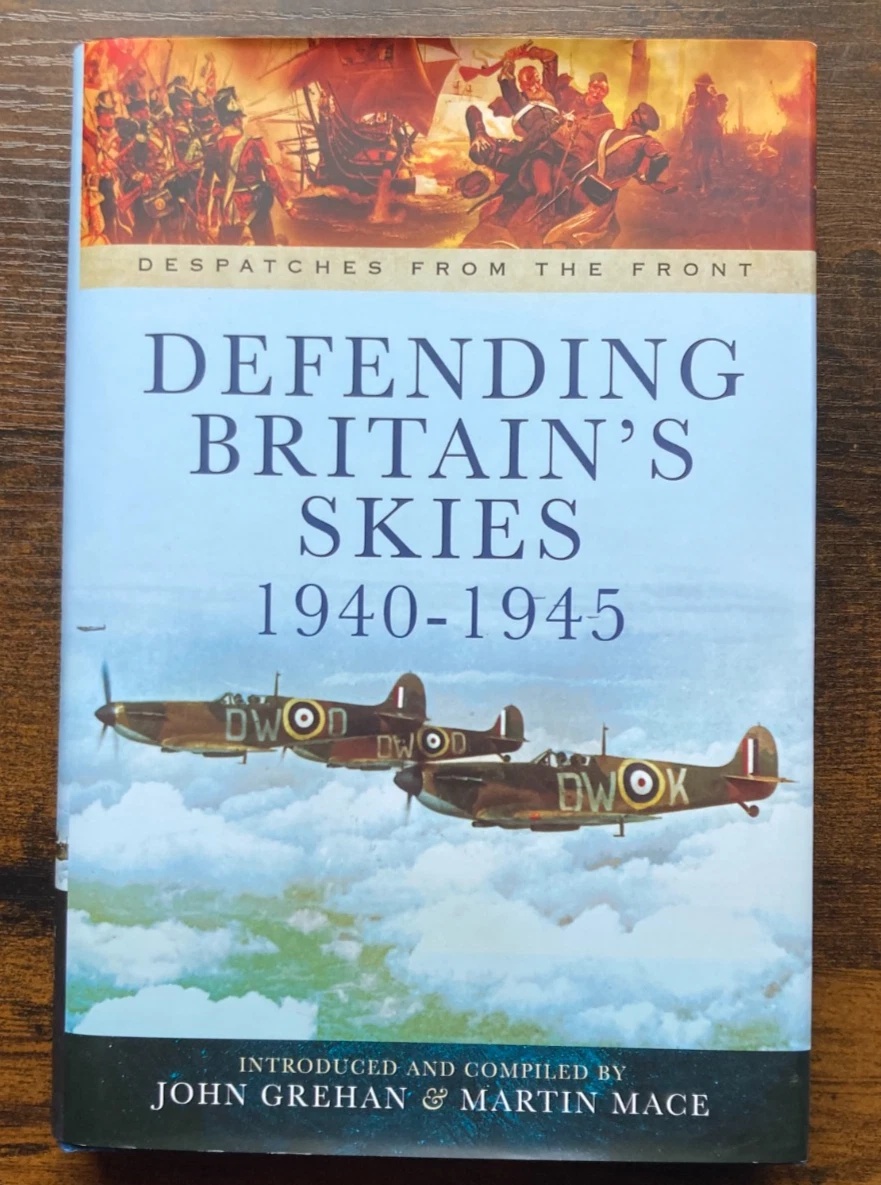
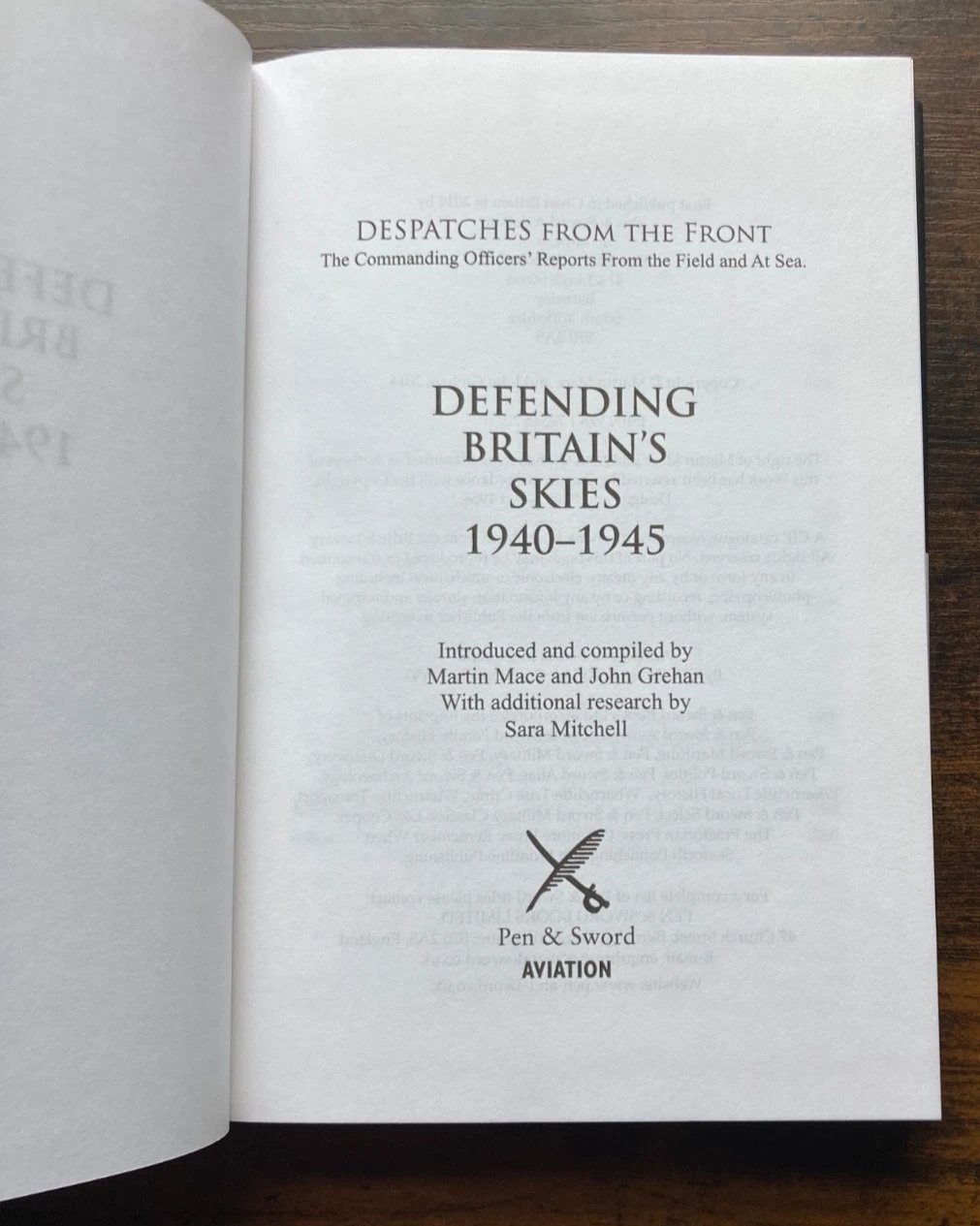
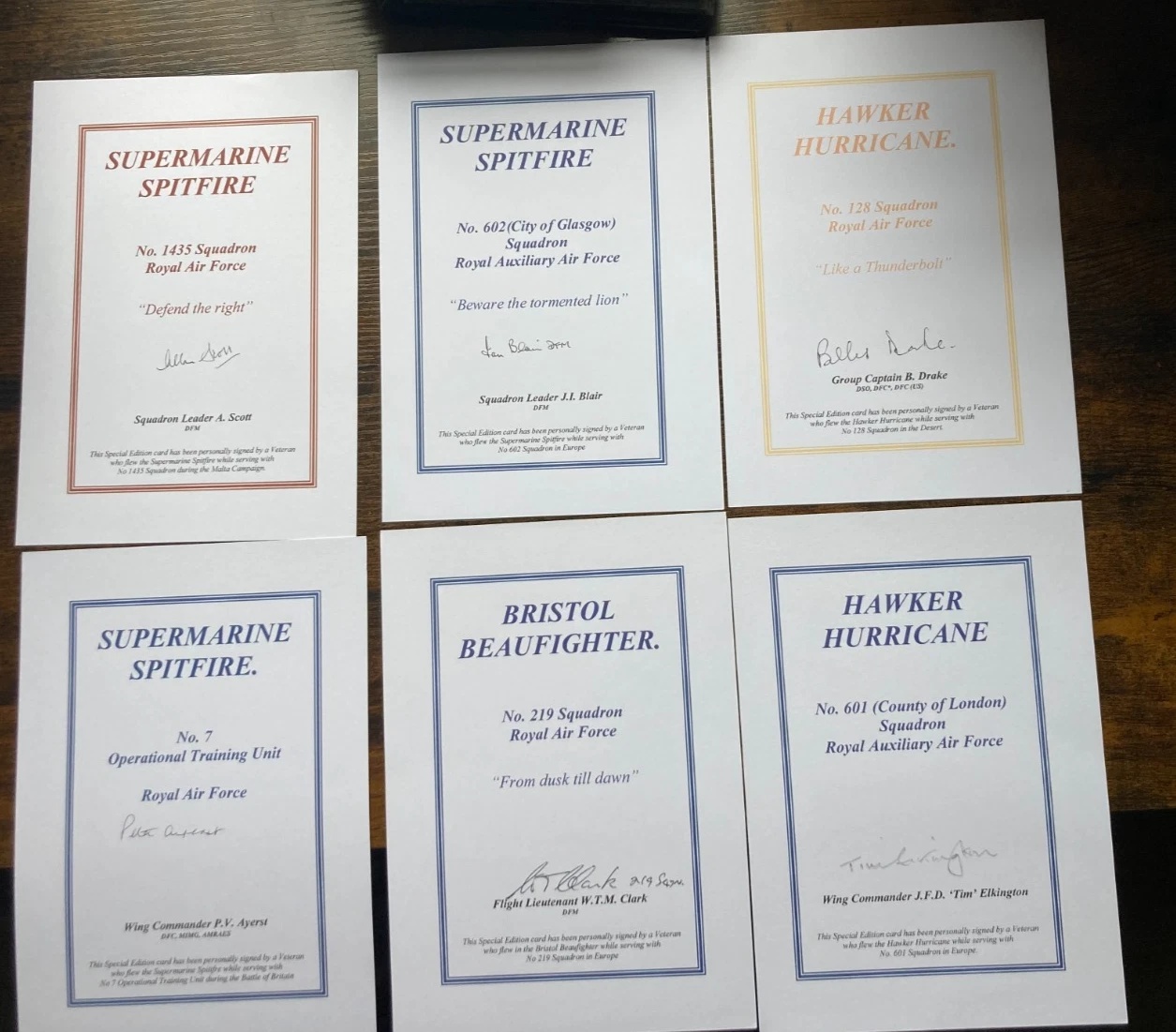
WW2 six BOB pilots ace signed book Defending Britains Skies by John and Martin Mace. 4 limited edition loose bookplates signed by Flt Lt W Clarke DFM, Wg Cdr J Tim Elkington, Sqn Ldr Alan Scott DFM, Grp Capt B Billy Drake DSO DFC DFC US, Sqn Ldr Ian Blair DFM, Wg Cdr Peter Ayerst DFC. Group Captain Billy Drake, DSO, DFC and Bar (20 December 1917 – 28 August 2011) was a British fighter pilot and air ace. He was credited officially with 18 enemy aircraft destroyed, two shared, two unconfirmed, four probables, two shared probables and five damaged and one shared damaged with the Royal Air Force during the Second World War. Further revisions to these statistics increased this total to 20 destroyed and seven damaged with a further 13 destroyed and four damaged on the ground. Drake flew Hawker Hurricanes, Supermarine Spitfires and Curtiss P-40s (Tomahawks/Kittyhawks), with squadrons based in France, England, West Africa, North Africa and Malta. He was the top-scoring RAF P-40 pilot and the second-highest-scoring British Commonwealth P-40 pilot, behind Clive Caldwell. Sqn Ldr Allan Scott DFM 27 sqn signed De Havilland Hornet Biography Card. Posted to the Battle of Britain airfield of Biggin Hill in 1941 with 124 Squadron, before being sent to Malta, which was under siege with continual raids by the Luftwaffe. He served with 603 Squadron, and then when that disbanded with 1435 Squadron at Luqa airfield, before returning to Britain and flying a third tour of operations, switching from his beloved Spitfire to a long-range Mustang fighter. Sqn Ldr Ian Blair DFM joined 113 Squadron in 1938 as a AC1/Armourer AG. on Hawker Hind and later Blenheim Mk 1s. He took part in the heavy fighting of the first Libyan campaign. He was forced to take control and fly the Blenheim aircraft after his pilot was killed following an attack by an Italian Fiat CR 42. Remarkably he managed not only to evade the enemy aircraft, but fly to fly the Blenheim 350 miles back to his base where he made a successful textbook landing. This extraordinary action earned him the award of an immediate DFM. Ian Blair said about the event : The day before, we had been sent out to bomb an enemy airfield at Derna, about 400 miles west of Alexandria. We were in a Blenheim bomber, and I was the observer. That’s the guy in the front who does the navigation and drops the bombs. But as soon as I had released the bombs, a fighter-plane attacked us. Glasgow-born Sqn Ldr Blair still has the blood-stained flight log he made that day. The pencil entries end suddenly. He said : There was an almighty bang. When I looked round, the pilot – a chap called Reynolds – was slumped forward on the controls. I think it was the very last round that killed him. It was really unfortunate. His luck had run out. Then the aircraft went into a steep dive. Despite having never flown an aircraft in his life before that moment, the young airman – paid one shilling and sixpence per day extra to fill in as part-time air crew – took charge. He said : From that moment the only thing going through my mind was survival. Everything happened so quickly, and we had to get the heck out of there. I managed to pull the pilot’s body off his seat and get the aircraft under control. But we still had to get home and land the thing. My gunner, Hank, sent a message back to base saying: ‘We’re in dire trouble here, the observer is flying the aircraft.’ Lo and behold, when we got back to base there was whole gallery of people, cars, ambulances and fire tenders all lined up waiting for the ultimate – but it didn’t happen. I had spent a long time watching pilots, and made a textbook landing. We came down in a shower of dust. Perhaps I was a bit over-confident. The air officer commanding the base apparently said: ‘If that guy can fly an aircraft without a pilot’s course, let’s send him on a pilot’s course.’ He was presented with his DFM by George VI. The experience led him to train as a pilot at No 4 SFTS RAF Habbaniya, where the No 6 War Course were heavily engaged in operations to raise the siege of the base from the Iraqi Army. He was finally awarded his wings in May 1941. On return to the UK he served with 501 Squadron on combat duties on Spitfire Mk V’s until injured as a result of enemy action. On return to flying duties he was posted to 602 Squadron flying MkV’s and MkIX’s until June 1944. In February 1944, he claimed a high altitude victory by destroying a Me.109 F at an altitude of 35,000 feet, flying a Spitfire Mk.VII H.F. Peter Ayerst was commissioned into the Royal Air Force on 14 December 1938 as an acting pilot officer on probation. In August 1939, he was posted to No. 73 Squadron to fly Hurricanes. He was regraded to pilot officer on probation on 3 September 1939 and his commission was confirmed on 6 October 1939. He was sent to France with the squadron and scored his first victory in April 1940. After a spell instructing, when he shared in the destruction of a Heinkel He 111 medium bomber with two other pilots, he had postings with both Nos. 145 and 243 Squadrons. In July 1942 he went to North Africa with No. 33 Squadron, before being promoted to flight commander with No. 238 Squadron, both postings with further combat success. After a period in South Africa, he returned to the UK, joining No. 124 Squadron flying Spitfire Mk VIIs in defence of the invasion ports, where he scored his final victory; then flew Spitfire Mk IXs on bomber escorts to Germany. He later became a Spitfire test pilot at Castle Bromwich with the instruction of Alex Henshaw. In November 1944, he was awarded the Distinguished Flying Cross. Ayerst’s final victory tally stood at five aircraft destroyed, two of which were shared with other pilots, one aircraft probably destroyed, three damaged and two further destroyed on the ground. After the war, Ayerst became one of the most highly regarded wartime instructors in the RAF. William Terence Montague Clark, DFM, AE (11 April 1919 – 7 May 2020) was a British nightfighter navigator/radar operator in the Royal Air Force (RAF) from 1938 to 1945. He, along with John Hemingway, was one of the last two verified surviving aircrew of the Battle of Britain. Clark enlisted in the Auxiliary Air Force in 1938 joining No. 615 Squadron at Kenley in March 1938 as an aircraft hand, then trained to be an aircraft gunner in Hawker Hectors on Army cooperation duties. He joined No. 219 Squadron, then flying Bristol Blenheims, at Catterick on 12 July 1940, later training on radar as a radio observer, flying in Bristol Beaufighters. On the night of 16/17 April 1941 Clark flew with the commanding officer of 219 Squadron, Wing Commander T.G. Pike, when Pike’s own navigator was taken ill. They intercepted and destroyed a Junkers Ju 88 and a Heinkel He 111 in the Guildford area. During the night of 27/28 April 1941, flying with Flying Officer D.O. Hobbis, his regular pilot, Clark assisted in the destruction of an unidentified enemy aircraft, on each of 1/2 June and 13/14 June 1941 they shot down a Heinkel He 111. Clark was awarded the Distinguished Flying Medal, which was gazetted on 8 July 1941. Commissioned as a Pilot Officer in May 1942, Clark had reached the rank of Flight Lieutenant by the end of the war. Post war Clark joined the reconstituted Royal Air Force Volunteer Reserve (RAFVR) in 1949 serving in the Fighter and Aircraft Control Branches before resigning his commission in 1954. Clark died on 7 May 2020 at the age of 101, leaving John Hemingway as the last surviving member of The Few. Wing Commander John Francis Durham “Tim” Elkington (23 December 1920 – 1 February 2019) was a British Royal Air Force (RAF) fighter pilot who flew during the Battle of Britain, and was one of the last surviving aircrew known as “The Few”. Elkington joined the Royal Air Force in September 1939 as a Flight Cadet at the Royal Air Force College Cranwell. Between October 1939 and April 1940 he trained at No. 9 Elementary Flying Training School at RAF Ansty. Elkington then undertook further training with No. 17 Service Flight Training School at RAF Cranwell. He was commissioned on 14 July 1940[3] and joined No. 1 Squadron RAF at RAF Northolt a day later and flew Hawker Hurricanes during the Battle of Britain. His first confirmed “kill” came on 15 August 1940, downing a Messerschmitt Bf 109. A day later he was shot down and wounded on 16 August 1940 (research shows that he was shot down by Helmut Wick). After recuperating at the Royal West Sussex Hospital at Chichester he rejoined No. 1 Squadron on 1 October 1940 at RAF Wittering. After a spell with No. 55 Operational Training Unit as an instructor, in late May 1941 he joined No. 601 Squadron RAF at RAF Manston. He was promoted to Flying Officer on 14 July 1941. From there he joined No. 134 Squadron RAF at RAF Leconfield in July 1941. On 12 August 1941 the squadron embarked on HMS Argus and took off from the carrier on 7 September for an airfield near Murmansk. Until mid-October 1941 Elkington took part in escorting bombers and also trained Russian pilots to fly the Hurricane. On 6 October 1941 Elkington together with Sgt. B. Barnes from the No. 134 Squadron[citation needed] shot down a German bomber Junkers Ju 88 over Vayenga. He returned from Russia in January 1942. In April 1942 he joined the Merchant Ship Fighter Unit (MSFU) at RAF Speke until August 1942. After a short period with No. 1 Squadron again, in September 1942, Elkington joined No. 539 Squadron RAF at RAF Acklington flying Hurricanes alongside Douglas A-20 Havoc aircraft on night operations. He was promoted Flight Lieutenant 14 October 1942. After 539 Squadron was disbanded in late January 1943, he joined No. 197 Squadron RAF at RAF Drem flying the Hawker Typhoon. After operations from RAF Tangmere he was posted to No. 67 Squadron RAF at Alipore, Calcutta in December 1943. When the tour expired, Elkington spent three years commanding AFDU at RAF Amarda Road and he returned home in October 1946. Good Condition Est.
Share this lot: